For joining and surfacing of Ni-Cr-Mo alloys, cryogenic and high temperature service, pressure vessels, dissimilar metals
Storage
Store in dry conditions
Color
Blackish-grey
Yield Strength
350 MPa
Elongation
30%
Coating Type
Rutile
AWS Specification
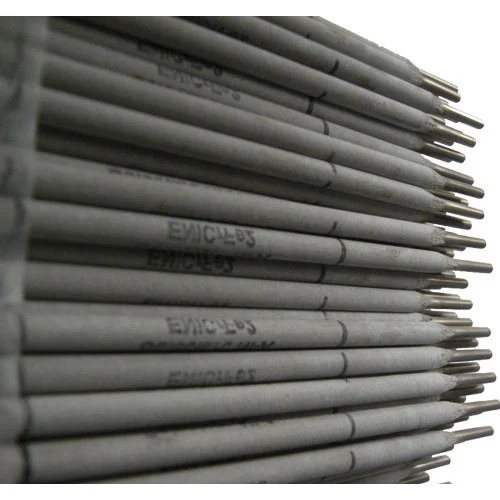
AWS A5.11: ENiCrMo-3
E NiCrMo 3 Trade Information
Minimum Order Quantity
100 Pieces
Delivery Time
3 Days
Packaging Details
BOX
Main Domestic Market
All India
About E NiCrMo 3
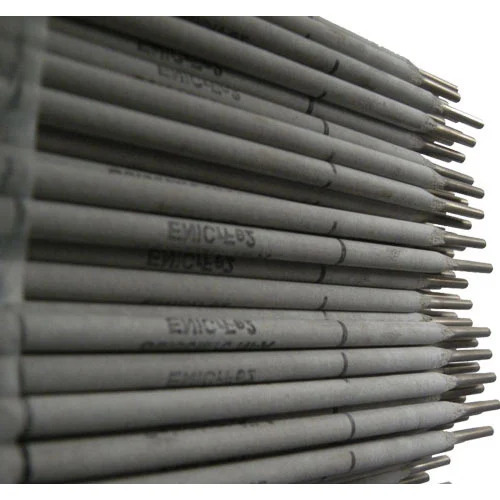
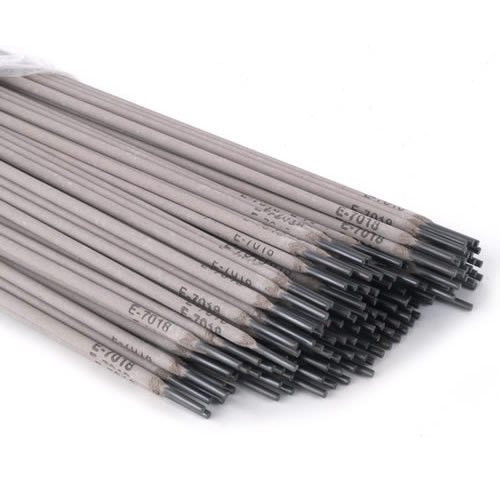
AWS/ASME classification for a nickel-based welding electrode (like Inconel 625 filler) known for exceptional strength and corrosion resistance, used for welding nickel-chromium-molybdenum alloys, dissimilar metals (nickel to steel), and for cladding, offering performance from cryogenic to high temperatures (up to 1000F/540C) in severe environments like chemical processing, marine, and power generation. Its weld metal composition includes high levels of Nickel (Ni), Chromium (Cr), Molybdenum (Mo), and Niobium (Nb), providing superior resistance to pitting, crevice corrosion, and stress cracking in chloride-rich media.
Key Characteristics:
Composition: High Ni, Cr, Mo, with Nb (e.g., 60Ni, 22Cr, 9Mo, 3.5Nb+Ta).
Performance: High strength, excellent toughness, and superior resistance to corrosion (pitting, crevice, stress corrosion cracking).
Temperature Range: Effective from cryogenic temperatures up to around 1000F (540C).
Weldability: Low-hydrogen coating, good operability, suitable for all-position welding, stable arc.
Common Applications:
Joining: Inconel 625, 825, Alloy 20, and dissimilar joints between nickel alloys, stainless steels, and carbon steels.
Surfacing/Cladding: Overlaying steel for corrosion protection in heat exchangers, marine components, and chemical equipment.
Industries: Chemical processing, power generation, petrochemical, nuclear, and marine.
Components in chloride-contaminated cooling water.
Engine exhaust systems, aircraft ducting, line pipes.
Versatile Application in Demanding Conditions
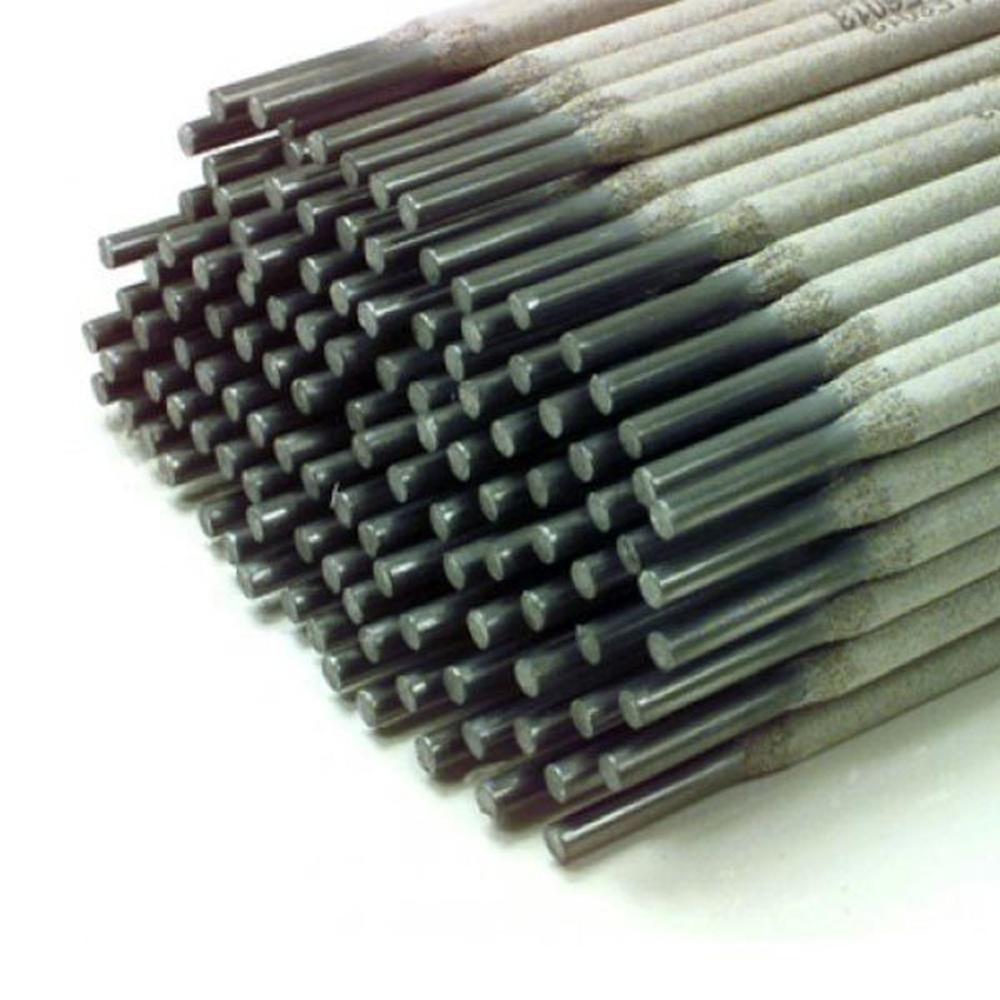
With superior resistance to extreme temperatures and corrosive conditions, E NiCrMo 3 electrodes are ideal for high-stress environments. Whether applied in the repair of cryogenic storage, pressure vessels, or during the fabrication of dissimilar metals, these rutile-coated nickel alloy electrodes deliver consistent weld quality and structural integrity.
Precision Engineering and Superlative Performance
Manufactured to strict AWS A5.11: ENiCrMo-3 standards, these electrodes assure impressive tensile and yield strengths. Available in various diameters, they offer flexibility for different welding needs while maintaining performance at temperatures up to 1200C. This makes them a preferred choice for high-performance welding operations.
FAQ's of E NiCrMo 3:
Q: How should E NiCrMo 3 electrodes be stored for optimal performance?
A: To ensure the longevity and reliability of E NiCrMo 3 electrodes, store them in dry conditions. Proper storage prevents moisture absorption, which is critical for maintaining their weld quality and mechanical properties.
Q: What are the primary applications of ENiCrMo-3 electrodes?
A: These electrodes are predominantly used for joining and surfacing nickel-chromium-molybdenum alloys, especially in environments that experience extreme temperatures such as cryogenic and high-temperature service, pressure vessels, and the welding of dissimilar metals.
Q: When is it recommended to use E NiCrMo 3 over standard welding electrodes?
A: E NiCrMo 3 is recommended when high mechanical strength, corrosion resistance, and temperature endurance are required, such as in chemical plants, refineries, power generation, and heavy engineering industries. They are particularly effective for joining dissimilar materials or where impact and temperature fluctuations occur.
Q: Where are E NiCrMo 3 electrodes commonly used in India?
A: In India, these electrodes are widely used by manufacturers, importers, suppliers, and traders involved in sectors like oil and gas, petrochemical, power generation, and pressure equipment fabrication.
Q: What welding process and parameters are suitable for E NiCrMo 3 electrodes?
A: E NiCrMo 3 electrodes are compatible with manual arc welding using a voltage range of 20-30 V and a welding current of 80-160 A. They are suitable for both 350 mm and 450 mm lengths, with various diameters to suit different project requirements.
Q: How does the rutile coating benefit the welding process?
A: The rutile coating on E NiCrMo 3 electrodes enhances arc stability, produces a smooth weld bead, and reduces spatter, making the welding process more controlled and efficient for both novice and experienced welders.
Q: What are the advantages of using E NiCrMo 3 electrodes in high-temperature environments?
A: These electrodes maintain mechanical strength, ductility, and corrosion resistance at temperatures up to 1200C, ensuring weld integrity even in the most challenging conditions.
Tell us about your requirement
Price:
Quantity
Select Unit
50
100
200
250
500
1000+
Additional detail
Mobile number
Email
Name
Comapny Name
Phone Number
Email Id
City / State
Confirm Your Requirement
Verification Code
Did not receive yet?
Resend OTP
You’re Done!
We have received your requirements and will reply shortly with the best price.
 Send Inquiry



 Send Inquiry

 Send Inquiry